"You Are His Own Special People"

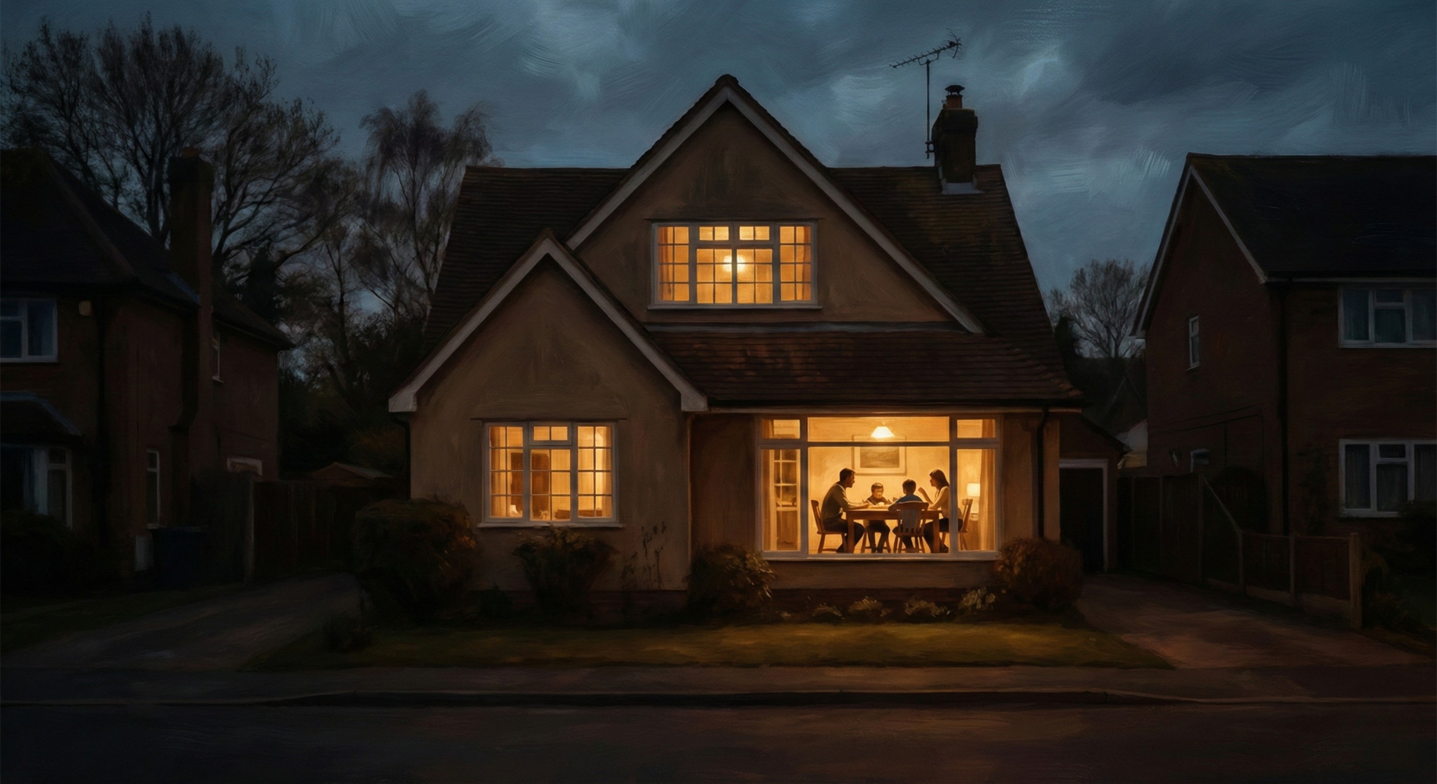
There is a quiet crisis happening inside Christian homes across America — and it has nothing to do with politics or economics. It is an identity crisis. Somewhere along the way, many Christian families began measuring themselves by the same standards as everyone else. Same priorities. Same fears. Same definition of success. With maybe a little church on Sunday morning to round it out.
The result is a generation of households that look, in almost every meaningful way, exactly like the world around them.
But Scripture calls the Christian family to something radically different. Not better in a self-righteous sense — but different in a gospel sense. Set apart. Distinct. Marked by grace in a way that the world cannot manufacture on its own.
In 1 Peter 2:9-12, the Apostle Peter gives us the foundation for what that looks like — and he starts not with what we do, but with who we are.
Before You Can Build a Different Kind of Home, You Have to Know You Are a Different Kind of People
Peter is writing to believers scattered across Asia Minor — displaced people living as minorities in a culture hostile to their faith. And rather than coaching them on how to blend in, he doubles down on their distinctiveness. He tells them exactly who they are:
"But you are a chosen generation, a royal priesthood, a holy nation, His own special people." — 1 Peter 2:9 (NKJV)
Four descriptions. Each one drawn from the language God used in the Old Testament to describe Israel. Each one now applied to the new covenant people of God — the church, the household of faith.
A chosen generation. Not chosen because of anything we did or deserved. Chosen by God before the foundation of the world. This is the most stabilizing truth a Christian family can stand on — your home does not have to earn its place with God. He chose you. That is the starting line, not the finish line.
A royal priesthood. In the Old Testament, priests stood between God and the people. Now, through Christ our great High Priest, every believer has direct access to the Father. Your home is a priestly household. Your dinner table, your bedtime routines, your conversations in the car — these are priestly moments. You are mediating the presence and grace of God to the people under your roof every single day.
A holy nation. Holy means set apart — consecrated, dedicated to a purpose. Your family is not called to be isolated from culture, but to be distinct within it. There is supposed to be something visibly different about the way a Christian household operates.
His own special people. This is the most intimate description of all. The Greek word carries the idea of a prized possession — something treasured, guarded, delighted in. God does not merely tolerate your family. He treasures it. Your home — with all its imperfection and ordinary chaos — is precious to Him.
And then verse 10 lands the gospel: "who once were not a people but are now the people of God, who had not obtained mercy but now have obtained mercy."
Before Christ — not a people. After Christ — God's people. Before Christ — no mercy. After Christ — overwhelmed by mercy. That is the gospel in two lines.
Your Identity Has a Mission Attached to It
Peter doesn't let us linger too long in the comfort of our identity before he gives us its purpose. The second half of verse 9 tells us why God has made us who we are: "that you may proclaim the praises of Him who called you out of darkness into His marvelous light."
Your home is a stage. Every Christian household is a little theater where the character and grace of God is meant to be on display for the watching world. The way you love each other, the way you handle conflict, the way you parent, the way you open your home to others — all of it is either proclaiming the praises of God or obscuring them.
God called us out of darkness into His marvelous light. That is a real transfer — from one kingdom to another, from one lord to another. And that transfer is supposed to be visible.
Sojourners and Pilgrims: Living Like You Don't Belong Here
Verses 11-12 bring the sojourner call: "Beloved, I beg you as sojourners and pilgrims, abstain from fleshly lusts which war against the soul, having your conduct honorable among the Gentiles, that when they speak against you as evildoers, they may, by your good works which they observe, glorify God in the day of visitation."
Peter calls his readers sojourners and pilgrims — people temporarily residing in a foreign land, on a journey toward somewhere else. And he says this identity should change how you live. Specifically, it should make you honest about the ways the world's desires are trying to move into your home. The love of comfort over sacrifice. The craving for approval over faithfulness. The pursuit of success over holiness. These are not neutral forces — they are weapons aimed at the soul of your household.
But here is the breathtaking vision Peter closes with: live so differently that even your critics end up giving glory to God. He does not say shield yourself from opposition. He assumes it is coming. He says — be so visibly, unmistakably good that the watching world, even those who oppose you, will one day have to acknowledge that God was in it.
The Foundation Is Not Your Performance — It Is His Choice
Here is what I want every Christian family to carry home from this passage: you do not build a different kind of home by trying harder. You build it by going deeper into who God has already declared you to be.
The gospel says that before you ever did anything right, God chose you. Before your home was orderly or impressive or particularly spiritual, He called it His own special people. Before you figured out how to lead or love well, He poured mercy on you.
That is the foundation. And it is unshakeable.
When that identity goes down deep, everything starts to change. You stop parenting out of fear and start parenting out of grace. You stop performing for the neighbors and start living for an audience of One. You stop trying to hold it all together by willpower and start resting in the One who chose you before time began.
The Christian home is different not because Christian people are better — but because a better God has made them His own special people.