Blind from Birth

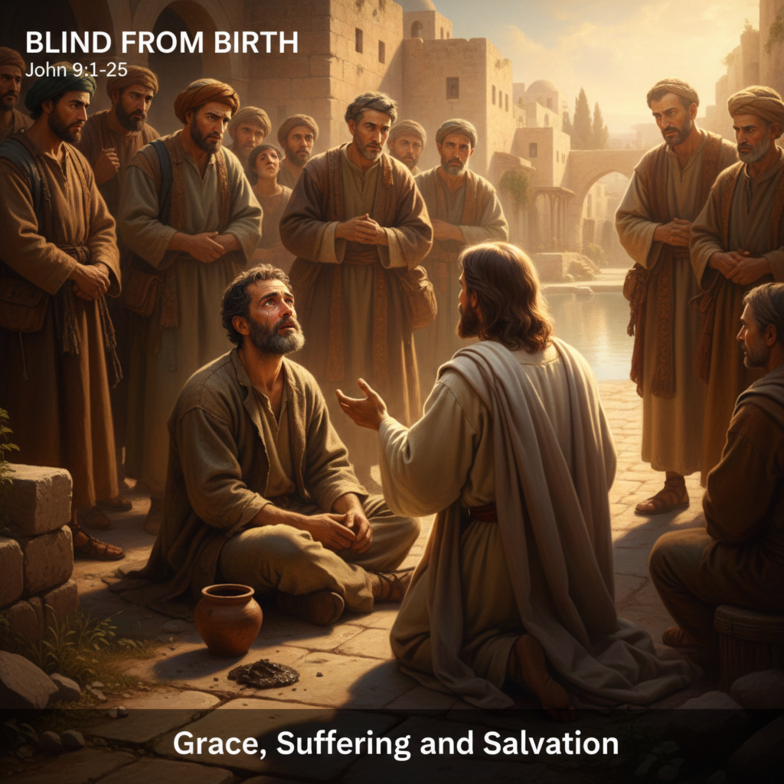
Blind from Birth: What John 9 Teaches About Grace, Suffering, and Salvation
A reflection on John 9:1-25
---
There is a man sitting by the side of the road in Jerusalem. He has been there for years. He was born blind, and begging is the only life he knows.
He is not looking for Jesus. He cannot see Jesus coming. He does not cry out or ask for help.
But Jesus sees him.
And that changes everything.
Why Was This Man Born Blind?
When the disciples saw the blind man, they asked the question we all ask when we encounter suffering: Who is to blame?
"Rabbi, who sinned, this man or his parents, that he was born blind?"
They assumed every tragedy must be a punishment for a specific sin. Someone must have done something wrong.
Jesus shattered their categories. "It was not that this man sinned, or his parents, but that the works of God might be displayed in him."
This man's decades of darkness were not meaningless. They were not random. They had a purpose—one that would only become clear when the Son of God stopped by the roadside and gave him sight.
This is hard to hear. But it is also deeply comforting once you understand it.
Your suffering has a purpose you may not be able to see yet. The question is not "Why is this happening to me?" The better question is "How might God be glorified through this?"
What Does It Mean to Be Spiritually Blind?
The detail that this man was blind from birth is theologically significant. He never had a baseline of sight to return to. He did not know what he was missing. Darkness was the only reality he had ever known.
This mirrors our spiritual condition apart from Christ.
We are not born as morally neutral people who later choose to turn away from God. According to Scripture, we are born spiritually blind. We cannot see the kingdom of God on our own. We cannot perceive spiritual truth without divine intervention.
A child raised in a windowless underground room would not believe you if you told him about the sun. His entire frame of reference is darkness. He would call his prison "normal" because he has never seen the light.
That is fallen humanity. And that is why salvation must be a divine rescue, not a human achievement.
Why Did Jesus Use Mud to Heal the Blind Man?
Jesus could have healed with a word. He had done it before. So why did He spit on the ground and make mud?
Because He was making a theological statement.
When Jesus bent down and formed mud from the earth, He was echoing Genesis 2:7, where God formed Adam from the dust of the ground. Jesus was acting as Creator—the same hands that formed the first man were now restoring sight to a man who had never seen.
This is the Potter and the clay. And notice: the clay did not protest. The blind man did not demand an explanation before obeying. He had mud on his face and no answers—and he trusted anyway.
That is faith.
Did the Man's Obedience Cause His Healing?
Jesus commanded the man: "Go, wash in the pool of Siloam."
The man obeyed. He went, he washed, and he came back seeing.
But here is the crucial question: Did his obedience cause the healing? Did the water have special power?
No. The power was in Christ's word, not in the man's action.
This is what theologians call effectual calling. When God calls someone to salvation, He provides the very ability to respond. The command carries the power to obey.
Think of Lazarus in the tomb. Jesus did not say, "Lazarus, if you want to come out, come out." He commanded a dead man to rise—and the command gave Lazarus the power to obey.
A living person breathes, but breathing does not make you alive; it proves you are alive. A saved person obeys, but obedience does not make you saved; it proves you are saved.
Why Did the Pharisees Reject the Miracle?
As the man gained sight, a strange thing happened: the people who could "see" became increasingly blind.
The Pharisees interrogated the healed man. They interrogated his parents. They were desperate to discredit the miracle because Jesus had healed on the Sabbath—and in their system, anyone who broke the Sabbath could not be from God.
They had a theological framework that could not accommodate what had just happened. So rather than adjusting their theology, they denied the evidence standing in front of them.
The same sun that melts wax hardens clay. The same gospel that opens some eyes hardens other hearts.
This is a warning for religious people. You can know all the right answers and still miss the Savior. You can memorize Scripture and use it as a wall to keep Christ out.
The Simplest and Most Powerful Testimony
When the Pharisees pressured the man for answers he did not have, he gave them the only testimony that mattered:
"One thing I know: that though I was blind, now I see."
He could not explain the mechanics of the miracle. He did not have a theology degree. But he knew what had happened to him.
That is the testimony of everyone who has been born again. We may not be able to explain every doctrine. But we know that we were dead, and now we are alive. We were in darkness, and now we see the Light of the World.
And notice: the man did not heal himself. He did not earn it. He did not even ask for it. He was sitting in the same darkness he had always known—and Jesus passed by and had mercy.
That is grace.
Have Your Eyes Been Opened?
This passage forces a question that demands an answer.
Not "Did you grow up in church?"—the Pharisees grew up in the synagogue.
Not "Do you know the Bible?"—the Pharisees had it memorized.
Not "Are you religious?"—the Pharisees were the most religious men in Israel.
The question is: Do you see Jesus?
If you do, it is because He opened your eyes. Give Him glory.
If you do not, the good news is that the same Jesus who stopped for a blind beggar is still passing by today. He does not wait for you to clean yourself up. He does not require you to understand everything first. He speaks a word of power—and blind eyes open.
Come to Him. Call on His name. And He will give you eyes to see.
---
This post is based on a sermon from the Gospel of John series preached at Liberty Baptist Church. For more resources on the sovereignty of God and the Gospel of John, visit our website or join us for Sunday worship.
---
Related Questions:
What does John 9 teach about suffering and God's sovereignty?
Why did Jesus heal on the Sabbath?
What is the difference between physical and spiritual blindness in the Bible?
How does the healing of the blind man illustrate salvation?
Why did the Pharisees reject Jesus despite the evidence of miracles?